
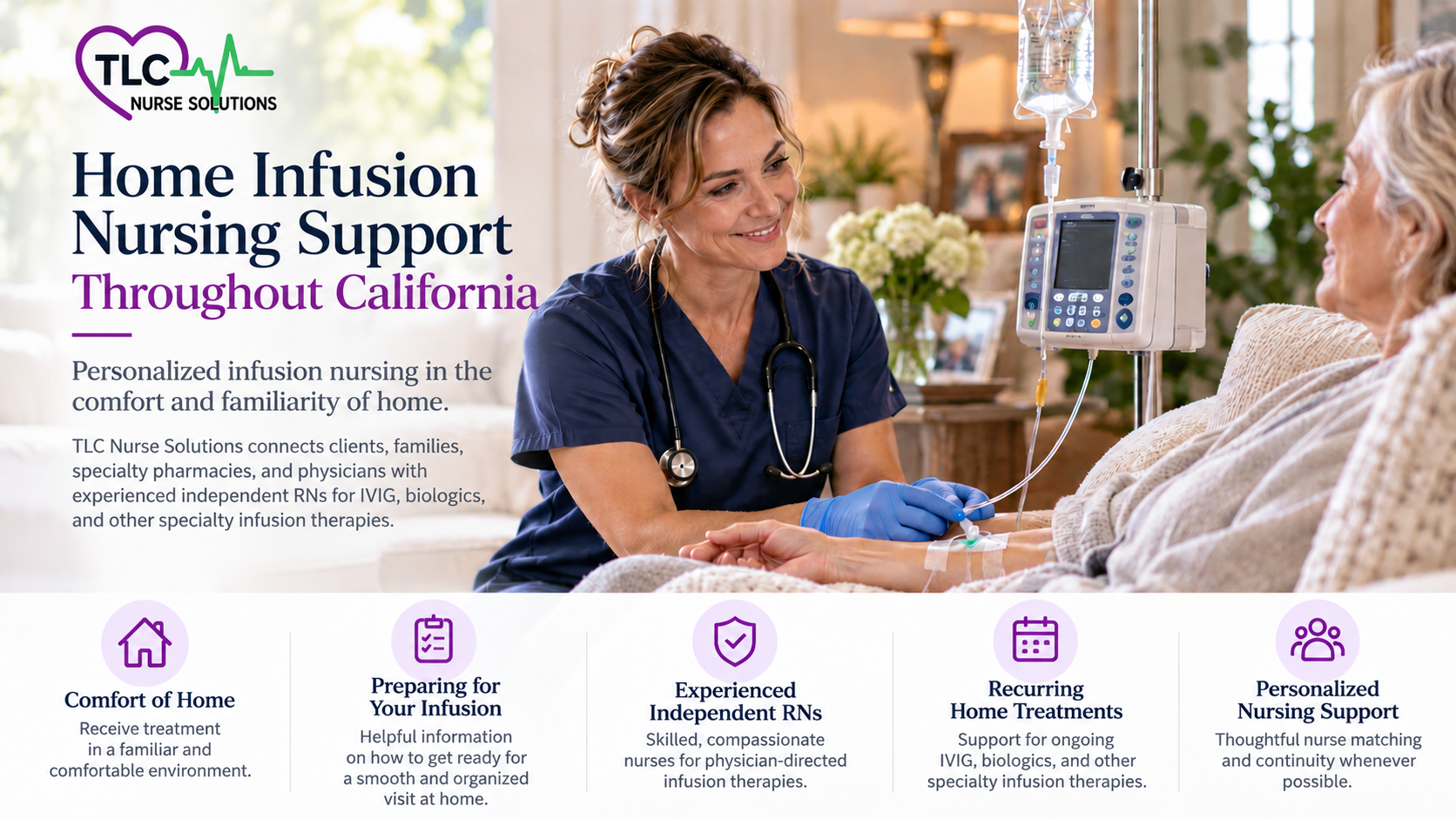
Personalized Home Infusion Nursing Support Throughout California
Personalized Infusion Nursing in the Comfort and Familiarity of Home
Receiving prescribed infusion therapy at home allows many individuals to continue important medical treatments while remaining in familiar surroundings, maintaining personal routines, and staying connected to family and everyday life.
For patients receiving ongoing specialty medications, home infusion nursing can provide a more personalized treatment experience without requiring travel to an outpatient infusion center for every appointment.
TLC Nurse Solutions is a California independent nurse registry connecting clients, families, specialty pharmacies, physicians, and healthcare professionals with experienced independent Registered Nurses (RNs) for physician-directed infusion therapies in private residences and other appropriate care settings throughout California.
Our approach emphasizes thoughtful nurse matching, organized scheduling, responsive communication, and continuity whenever possible.
The prescribing provider and specialty pharmacy establish the treatment plan, medication requirements, and clinical protocols. Independent RNs provide nursing services according to applicable orders, protocols, and their professional scope of practice.
For a complete overview of our statewide services, visit Infusion Nursing Support Across California. For information about the treatments themselves, explore Infusion Therapy Across California.
Why Patients Choose Home Infusion Nursing
For many patients, receiving infusion therapy at home offers practical advantages beyond convenience.
Recurring treatment appointments can affect transportation, work schedules, family responsibilities, energy levels, and everyday routines. When home administration is medically appropriate, patients may appreciate receiving treatment in a familiar setting.
Potential benefits include remaining in the comfort and privacy of home, reducing travel to outpatient facilities, maintaining familiar routines, receiving individualized nursing attention, and having family members nearby when appropriate.
Patients receiving recurring therapy may also appreciate developing familiarity with a nurse who understands their established treatment routine.
Home infusion is not appropriate for every medication or medical situation. The prescribing provider and specialty pharmacy determine whether the prescribed therapy and the patient’s healthcare needs are suitable for home administration.
What Home Infusion Nursing May Include
The independent RN’s responsibilities depend on the prescribed medication, physician orders, specialty pharmacy protocols, vascular access requirements, and individual clinical circumstances.
Home infusion nursing services may include reviewing treatment orders and pharmacy instructions, performing pre-infusion assessments, obtaining vital signs, reviewing relevant health changes, establishing or accessing approved vascular access, administering prescribed medications and premedications, following infusion rates and titration instructions, monitoring for treatment-related symptoms, and completing required nursing documentation.
The nurse may also communicate relevant findings to the specialty pharmacy or prescribing provider and provide treatment-related education consistent with the established care plan.
Independent RNs exercise professional nursing judgment within their applicable scope of practice. TLC coordinates nursing referrals and administrative aspects of assignments rather than directing patients’ clinical treatment.
Preparing Your Home for an Infusion Visit
One advantage of home infusion is the ability to create a comfortable treatment space suited to the patient’s preferences and needs.
A little preparation before the nurse arrives can help make the appointment more organized.
Choose a Comfortable Treatment Area
Select a clean, well-lit space where the patient can sit or recline comfortably during treatment.
A supportive chair, recliner, or appropriate bed may be suitable depending on mobility, medical needs, and the prescribed therapy.
There should be enough room for the nurse to access the patient safely and arrange necessary equipment.
Provide Space for Equipment and Supplies
Infusion treatment may involve medication, tubing, infusion pumps, saline, dressings, emergency supplies, and other equipment supplied by the specialty pharmacy.
Keep the treatment area organized and ensure required supplies are accessible.
If prescribed equipment requires electricity, provide access to an appropriate outlet.
Make the Space Comfortable
Depending on treatment duration, patients may appreciate having a blanket, water, approved snacks, reading materials, a phone, or other personal necessities nearby.
Comfortable clothing that allows access to the prescribed infusion site can also make the appointment easier.
Consider Household Activity
A quiet, relatively uninterrupted environment helps the nurse concentrate on prescribed treatment and monitoring requirements.
Family members, caregivers, and household pets should be accommodated in a way that maintains a clean and safe treatment area.
Plan for Mobility and Bathroom Needs
Patients who have difficulty walking, transferring, or moving independently should discuss these needs with the nurse and healthcare team before treatment.
The arrangement should account for safe positioning, access to necessary facilities, and assistance that may be required during the visit.
Preparing Yourself for Home Infusion Therapy
In addition to preparing the home, patients can take several steps to support a comfortable treatment experience.
Always follow individualized instructions from the prescribing provider and specialty pharmacy.
Maintain Appropriate Hydration
Unless a healthcare provider has recommended fluid restrictions, patients should maintain adequate hydration before and after treatment.
Hydration is particularly important for many individuals receiving IVIG therapy. Patients with kidney disease, heart failure, or other conditions requiring fluid management should follow their specific medical instructions.
Eat and Rest Appropriately
A balanced meal or light snack may be helpful before treatment unless the healthcare team has instructed otherwise.
Adequate rest before a scheduled infusion may also contribute to comfort during the appointment.
Wear Comfortable Clothing
Choose clothing that allows access to the arms or prescribed vascular access device.
Keeping comfortably warm may be helpful for patients who have experienced difficulty with peripheral IV placement.
Follow Medication Instructions
Take prescribed medications and premedications according to instructions provided by the treating healthcare professionals.
Do not independently stop, change, or withhold medications before an infusion.
Communicate Changes in Health
Report recent illness, fever, infection, hospitalization, medication changes, previous infusion reactions, or other significant health concerns to the appropriate healthcare professional before treatment.
The specialty pharmacy or prescribing provider may need to review these changes.
For additional patient preparation and treatment information, visit Infusion Nursing Support Across California.
Medication Delivery and Supplies for Home Infusion
Unlike treatment in an infusion center, home infusion requires advance coordination of medication delivery and supplies to the patient’s residence.
The specialty pharmacy generally arranges prescribed medications, applicable administration supplies, pharmacy protocols, and required emergency medications.
Before the scheduled appointment, patients or caregivers should confirm that the expected delivery has arrived and notify the specialty pharmacy promptly about missing items.
Medication should be stored according to pharmacy instructions, including refrigeration requirements when applicable.
Patients should not independently change medication storage or preparation procedures.
Required emergency medications, including a prescribed anaphylaxis kit when applicable, must be available and appropriate for use before treatment begins.
If essential medications, emergency supplies, or required equipment are missing or expired, the infusion should not begin until applicable requirements have been satisfied and necessary pharmacy or prescriber guidance has been obtained.
Early communication helps the pharmacy and nursing team address problems before the scheduled visit whenever possible.
The Home Infusion Appointment: What to Expect
Each treatment follows the prescribing provider’s orders and specialty pharmacy protocol, but understanding the general appointment process may help patients and families feel more prepared.
When the Nurse Arrives
The independent RN reviews prescribed treatment instructions, confirms medication and required supplies, and performs assessments appropriate to the therapy.
The nurse may obtain vital signs, review relevant symptoms, assess vascular access, and confirm prescribed premedications.
During the Infusion
The nurse administers prescribed medication according to applicable orders and pharmacy protocols.
Depending on treatment requirements, the nurse may follow specific administration rates, titration schedules, monitoring intervals, and documentation instructions.
The patient can remain in a comfortable home setting while receiving appropriate nursing attention throughout treatment.
After the Infusion
The nurse completes required post-treatment activities according to the prescribed protocol.
These may include monitoring, vital signs, vascular access care, patient instructions, documentation, and communication with the specialty pharmacy.
Patients should follow their healthcare team’s recommendations regarding activity, hydration, delayed reactions, and when to seek medical assistance.
Home Infusion for Recurring Specialty Treatments
Many patients receive infusion therapy as part of an ongoing medical treatment plan.
Depending on the prescribed medication, treatments may occur weekly, every few weeks, monthly, or at other intervals established by the prescribing provider.
Home infusion nursing may be coordinated for intravenous immunoglobulin (IVIG), subcutaneous immunoglobulin (SCIG), biologic medications, immunotherapies, monoclonal antibody therapies, intravenous antibiotics, enzyme replacement therapies, transplant-related medications, and other physician-directed specialty infusion treatments.
Treatment frequency, administration methods, monitoring requirements, and nursing qualifications vary according to medication and individual circumstances.
For more information about particular therapies, visit IVIG and Specialty Infusion Nursing Support California.
The Value of Familiar Nurses for Ongoing Home Infusion
Patients receiving recurring infusion treatments often appreciate working with a nurse who becomes familiar with their established treatment routine.
Over time, a familiar nurse may better understand the patient’s communication preferences, vascular access history, prior treatment experiences, comfort preferences, and household considerations.
This familiarity can help recurring appointments feel more organized and personal.
TLC considers continuity when coordinating recurring home infusion assignments and works to identify independent nurses interested in ongoing schedules.
Whenever nurse availability and scheduling allow, TLC seeks to coordinate the same RN or a small group of familiar nurses.
Continuity cannot be guaranteed, but it remains an important consideration in thoughtful nurse matching.
Learn more about Thoughtful Nurse Matching for Complex Care Needs.
Home Infusion Nursing and Specialty Pharmacy Partnerships
Specialty pharmacies play a central role in many home infusion treatment plans.
The pharmacy typically coordinates medication dispensing, delivery, supplies, physician orders, treatment protocols, and other pharmacy-specific requirements.
TLC coordinates independent nursing availability and related administrative communication based on the referral.
For patients, this means the pharmacy, independent nurse, and TLC each have distinct responsibilities in supporting the treatment process.
For specialty pharmacy professionals seeking nursing resources, our dedicated pages explain these relationships in greater detail: Home Infusion Nursing Through Specialty Pharmacies and Nursing Support for Specialty Pharmacy Infusions California.
Long-Term Healthcare and Corporate Nursing Partnerships
TLC Nurse Solutions values long-term relationships with specialty pharmacies, infusion providers, biotechnology organizations, healthcare companies, and other enterprises seeking qualified independent nursing resources throughout California.
These relationships may involve recurring infusion referrals, specialized clinical assignments, coordinated nursing support across multiple locations, or ongoing healthcare programs.
Organizations exploring broader opportunities can learn more about our Corporate & Enterprise Nursing Partnerships Throughout California.
Through our established nurse registry model, TLC welcomes discussions about recurring nursing needs, professional collaboration, and appropriately structured projects that align with participating nurses’ qualifications and applicable clinical requirements.
Home Infusion for Patients Managing Complex Medical Needs
Some individuals receiving home infusion therapy are also managing chronic illnesses, neurological disorders, immune deficiencies, autoimmune conditions, or other complex medical circumstances.
These patients may require additional consideration regarding mobility, vascular access, communication, treatment positioning, family involvement, or coordination with healthcare professionals.
Depending on individual needs, home infusion nursing may complement Neurological Nursing Support Throughout California, High-Acuity Nursing Care in California, Complex Medication Management Support Throughout California, and Nurse Care Coordination Support Across California.
The appropriate nursing arrangement depends on the patient’s prescribed treatment and broader healthcare needs.
Supporting Home Infusion During Recovery
Home infusion may be part of a broader recovery plan following hospitalization, surgery, transplantation, or serious illness.
Patients and families may be managing multiple appointments, prescribed medications, mobility limitations, and other nursing requirements alongside their infusion schedule.
In these situations, TLC may also coordinate independent nursing services for broader recovery needs.
Related resources include Hospital-to-Home Transition Support in California, Private Nursing Support During Extended Recovery Throughout California, Long-Term Recovery Nursing Support Throughout California, and Post-Surgical Private Duty Nursing in California.
For transplant recipients, Transplant Nursing Support Throughout California provides additional information about private nursing during recovery.
Home Infusion and Aging in Place
For individuals who wish to remain at home while managing chronic medical conditions, prescribed infusion therapy may be one component of an ongoing healthcare plan.
Home infusion can be particularly helpful when transportation is difficult or frequent travel creates additional strain.
Depending on individual circumstances, related services may include Aging in Place Nursing Support Throughout California, Nurse Companion and Nursing Oversight Support Throughout California, and Medication Management Support Across California.
Home infusion nursing and broader private duty nursing are distinct services, although some patients may require both.
When Home Infusion Is Part of Private Duty Nursing
Some clients require additional nursing services beyond their scheduled infusion treatments.
For example, a patient recovering from serious illness or transplantation may need extended nursing shifts for medication routines, clinical observation, mobility assistance, or other prescribed nursing responsibilities.
In these situations, TLC can explore separate private duty nursing arrangements alongside the patient’s infusion schedule.
For more information, visit Private Duty Infusion Nursing in California and Private Duty Nursing Support Across California.
This distinction is important: an infusion appointment addresses the prescribed treatment, while a broader private duty nursing arrangement may address additional ongoing nursing needs.
Working With Families and Professional Care Teams
Home infusion therapy often involves communication among patients, family members, specialty pharmacies, prescribing physicians, and other healthcare professionals.
TLC coordinates the independent nursing component of the referral and provides administrative communication related to scheduling and assignments.
Depending on the patient’s circumstances, families may also work with case managers, discharge planners, professional fiduciaries, or other trusted advisors.
Related resources include Nursing Support for Case Managers California, Nursing Support for Discharge Planners California, Professional Fiduciary Nursing Support California, Concierge Nursing Support Throughout California, and Personalized Nursing Support for Families and Trusted Advisors Throughout California.
For information about communication and coordination, visit Client Care Resources and Who to Contact.
Home Infusion Nursing Support Throughout California
TLC Nurse Solutions coordinates independent home infusion nursing referrals throughout California, including the San Francisco Bay Area, Silicon Valley, Sacramento, the Central Valley, Los Angeles, Orange County, San Diego, coastal communities, and other California regions.
Our statewide approach supports clients, families, and specialty pharmacies seeking nursing resources across different geographic areas.
Availability depends on the patient’s location, prescribed therapy, clinical requirements, requested treatment dates, and independent nurse availability.
Explore Statewide Nursing Services and Support Across California for additional information.
Frequently Asked Questions About Home Infusion Nursing
What Is Home Infusion Nursing?
Home infusion nursing involves professional nursing services associated with prescribed infusion therapy in a patient’s residence or another appropriate home setting. The independent RN follows applicable physician orders, specialty pharmacy protocols, and professional nursing standards.
Can IVIG Be Administered at Home?
Certain IVIG therapies may be administered at home when the prescribing provider and specialty pharmacy determine that the patient’s condition, medication, monitoring requirements, and treatment setting are appropriate.
How Should I Prepare My Home for an Infusion Nurse?
Choose a clean, comfortable, well-lit treatment area with sufficient space for the nurse and equipment. Confirm that prescribed medication, supplies, and required emergency medications are available, and follow the pharmacy’s storage and preparation instructions.
Should I Drink Water Before My Home Infusion?
Adequate hydration is important for many infusion treatments, particularly IVIG. Patients should follow their healthcare provider’s instructions, including any fluid restrictions.
Can the Same Nurse Return for Future Treatments?
TLC considers continuity when coordinating recurring treatments and seeks to match patients with familiar independent nurses whenever scheduling and availability allow.
Does TLC Supply Infusion Medications?
No. TLC is an independent nurse registry. Medications, treatment orders, and applicable supplies are coordinated through the prescribing provider and specialty pharmacy.
Can Home Infusion Nursing Be Combined With Longer Private Duty Nursing Shifts?
Depending on the patient’s broader nursing needs, TLC may separately explore extended private duty nursing arrangements alongside prescribed infusion therapy.
Does TLC Coordinate Home Infusion Nurses Throughout California?
Yes. TLC coordinates independent RNs for physician-directed home infusion treatments throughout California, subject to location, clinical requirements, and nurse availability.
Discuss Home Infusion Nursing Support With TLC Nurse Solutions
Whether you are preparing for recurring infusion treatments at home, helping a family member coordinate care, arranging nursing services through a specialty pharmacy, or exploring an ongoing healthcare partnership, TLC Nurse Solutions welcomes the opportunity to discuss your needs.
Helpful referral information includes the patient’s location, prescribed medication, treatment frequency, requested appointment dates, anticipated visit duration, vascular access requirements, and specialty pharmacy contact information.
TLC can review the available information and explore independent RN availability for the requested treatment schedule.
Learn more About TLC Nurse Solutions, explore our Nursing Services Throughout California, review our Frequently Asked Questions, or Contact TLC Nurse Solutions to discuss home infusion nursing support.
TLC Nurse Solutions
Thoughtfully Coordinating Experienced Independent RNs & LVNs Throughout California
Call or Text: 510-780-1800
Email: info@tlcnursesolutions.com
Personalized Home Infusion Nursing, Thoughtfully Coordinated Throughout California